

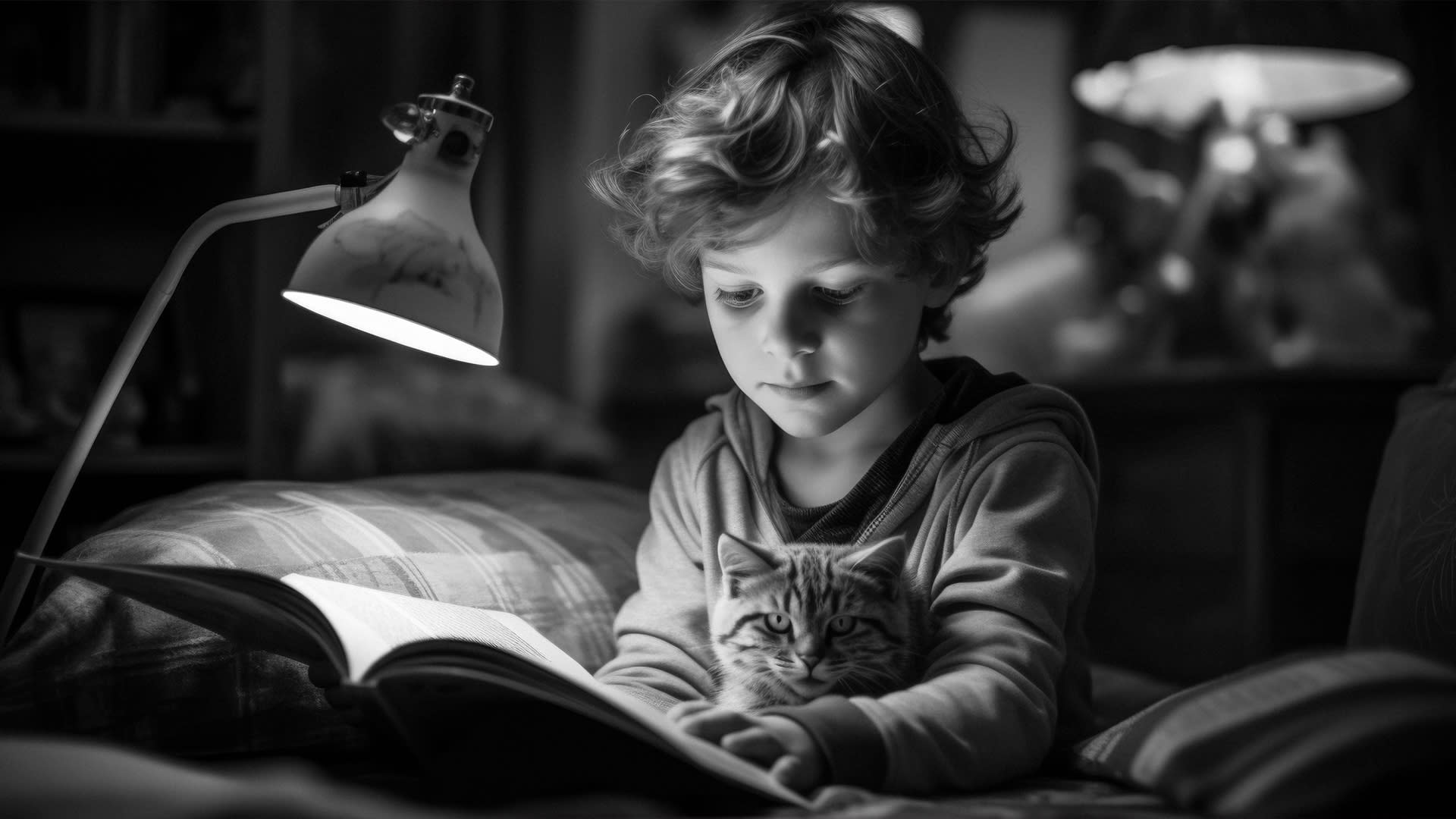
People often assume children’s books are “easy” because they are short. Then they try writing one and realize how exposed every decision becomes on the page. A picture book can be 600 to 900 words, but it still needs a clear emotional arc, a satisfying rhythm when read out loud, a strong sense of character, and a message that lands without sounding like a lecture. When any one of those pieces is even slightly off, the book feels flat, even if the writing is technically correct.
That is why many first-time authors decide to hire ghostwriter for a children’s book. They want professional structure, better pacing, and language that fits how kids actually hear stories. The worry, though, is real and it is not dramatic at all. If someone else writes it, will it still feel like your book, or will it come back sounding like a generic children’s story with your idea pasted on top?
You do not have to choose between quality and ownership. You can absolutely hire ghostwriter for a children’s book and still keep your vision intact, but the way you do it is not by hovering over every sentence. You keep your vision by setting the right foundation early, choosing the right kind of writer for children’s work, and using a process that keeps you involved at the moments that actually shape the book.
Why Vision Gets Lost In Children’s Ghostwriting Projects
Most authors think vision gets lost during drafting, but it usually gets lost earlier than that. It happens when the writer and the author have two different ideas of what the book is supposed to do. One person thinks the book is primarily funny, the other thinks it is primarily comforting. One person imagines a quiet ending, the other imagines a big celebratory ending. Those are not small differences in children’s books. Those differences become the book.
Vision also gets lost when an author brings only a topic, not a story. “A book about confidence” is not a story. “A kid who wants to join a game but freezes every time the ball comes near them” is a story. When you only bring a topic, the ghostwriter has to invent the emotional specifics, and that is where the book begins to feel like it belongs more to the writer than to you.
Finally, vision gets lost when there is no agreed standard for the reading experience. Children’s books live or die by how they sound out loud. If you and the ghostwriter are not testing for rhythm, page-turn momentum, and age-appropriate wording, you can end up with a manuscript that reads like adult writing simplified, instead of a children’s book that feels natural.
Get Clear On Your Vision In A Way A Writer Can Actually Use
If you want to hire ghostwriter for a children’s book without losing your vision, you need to translate your vision into a few concrete decisions. This is not about writing a long brief. It is about giving the ghostwriter something real to aim at.
Decide the emotional promise of the book
The emotional promise is the feeling a child should carry after the last page. It is simple, but it is powerful, because it guides tone, pacing, and word choice.
You do not need a perfect sentence, but you do need a true one. For example, “I can try again even if I feel embarrassed,” lands differently than “I should never give up.” The first feels like a child’s inner world. The second feels like a slogan. A good ghostwriter can still work with either, but only one will lead to a book that feels personal and warm.
Pick the format and age range early
Children’s books are not one category. A board book, a picture book, an early reader, and a chapter book require different skills. If you are unsure, a ghostwriter can help you decide, but you should at least come in with a guess, because format changes everything, including how much “voice” can live in the language.
A picture book, for example, often needs space for illustration to do half the storytelling. If you write too much explanation, you choke the art. An early reader, on the other hand, often needs more direct clarity because the child is decoding words and needs extra support from the text.
Write down your non-negotiables, but keep them tight
Non-negotiables should protect the heart of the book, not control every creative move. If the list is too long, you end up micromanaging. If there are none, the book can drift.
Here are examples of non-negotiables that actually help:
- The character’s personality stays gentle and thoughtful, not suddenly loud or fearless.
- The humor stays kind, not sarcastic or mean.
- The story stays culturally accurate, including names, clothing, phrases, or family dynamics.
- The ending stays soft and reassuring, not a dramatic “final lesson” speech.
That is enough direction to protect your vision while still allowing the ghostwriter to do the work you hired them for.
Choose A Ghostwriter Who Understands Children’s Storytelling, Not Just Writing
When people hire ghostwriter for a children’s book, they sometimes select a writer who has a strong adult portfolio, assuming good writing is universal. Strong writing helps, but children’s storytelling has its own rules. The best children’s writers are obsessed with clarity, rhythm, and emotional pacing. They can be playful without being messy, and they can be simple without being boring.
Ask for proof of long-form children’s work, not only short samples
Children’s book writing is short, but it is not easy. You want to see evidence the writer can sustain voice and consistency through a full manuscript. If the writer cannot share past books due to confidentiality, ask for something that still shows the skill, such as an anonymized excerpt, a spec sample, or a published piece under their name.
As you review the samples, look for the “read-aloud feel.” Does the language flow? Does it sound like something a caregiver would enjoy reading multiple times? Does the humor come from situation and character, rather than forced jokes?
Ask how they capture an author’s voice for a child audience
This is where many ghostwriters either shine or struggle. Your adult speaking voice is not automatically the voice that should appear on the page for children, but your values, your humor, your warmth, and your emotional instincts absolutely can show up if the writer knows what they are doing.
A strong ghostwriter can explain their approach. They might describe doing structured interviews, collecting phrases you naturally use, and building a voice reference sheet that includes “what to lean into” and “what to avoid.” If the writer says they can mimic anyone instantly without a discovery process, that should raise your caution, because children’s voice is delicate and is often built through careful iteration.
Build A Collaboration Process That Makes Drift Difficult
The biggest protection for your vision is a process that creates alignment before heavy drafting begins, and checkpoints that catch drift early. You want to avoid the situation where you receive a full draft and realize the tone is wrong from page one, because fixing that is painful and expensive.
Start with a one-page North Star document
This is different from a long creative brief. It is a one-page reference you both treat as a compass. It should include the age range, the emotional promise, three tone words, a short description of the main character, and a clear statement of what the book should never become. Keep it simple, but make it specific enough that two people can read it and imagine the same book.
If you are not sure what to write, tell the ghostwriter you want to create this together before drafting. The conversation itself will reveal whether they are the right partner, because a strong children’s ghostwriter will ask sharp questions that make you feel understood, not pressured.
Lock the structure before polishing language
Children’s books often fail when the author and writer spend too much time perfecting lines before the story architecture is settled. You want beats first, then wording. That is how you protect your message without getting stuck in endless sentence debates.
A simple beat plan should show the opening emotional state, the problem, the attempt, the setback, the turning point, and the resolution. Even if the final book is short, the beats matter, because the beats create the emotional experience.
Agree on what you will review, and when
A good process does not bury you in drafts, but it also does not disappear for weeks. The best collaboration rhythm depends on your schedule, but it should be predictable. Many projects work well when the writer delivers small sections or a few spreads at a time, so you can confirm tone and direction early.
This is also where you protect your own time. If you take ten days to review every small delivery, the project slows and frustration builds. The best ghostwriting relationships are steady, not intense and chaotic.
Keep Your Vision While Still Giving The Writer Room To Write
A lot of authors accidentally sabotage their own projects by either controlling every detail or being so hands-off that the writer makes all the creative decisions. There is a middle path that works well for children’s books.
You keep control of meaning, tone, and character behavior. You let the writer control phrasing, pacing mechanics, and the craft of simplifying language without flattening emotion. When you hire ghostwriter for a children’s book, that division keeps the manuscript both “yours” and professionally built.
A practical way to do this is to identify your “must-have moments,” meaning the scenes or lines that feel like the soul of the story. It might be a specific comforting phrase a caregiver says. It might be a moment of hesitation before courage. It might be a small detail that mirrors your real experience. Share those early, and let the ghostwriter build around them instead of inventing the emotional center from scratch.
Write For Illustration Without Writing Like An Instruction Manual
Even if the ghostwriter is not illustrating, the manuscript should respect the role of art. Picture books are a dance between text and image. If the text describes everything, the illustrator has no room to add humor, tenderness, or surprise. If the text is too vague, the illustrator may miss story logic and emotional cues.
A healthy approach is to let illustrations carry what can be seen, and reserve text for what must be heard. Instead of describing the entire room, the text might focus on the feeling the character cannot hide, or the tiny action that reveals anxiety, like squeezing a sleeve or hiding behind a chair.
Art notes can help, but they should be used sparingly and only to protect meaning. If a detail matters for plot or theme, it belongs in an art note. If the detail is decorative, it usually does not.
Revisions That Improve The Book Without Rewriting Your Identity Out Of It
Revision is normal in children’s books, especially when the goal is “simple and powerful.” The mistake is treating revisions as random polishing rather than intentional passes.
A practical revision approach often includes a story pass, a read-aloud pass, and a clarity pass. The story pass checks whether the emotional arc lands and whether the character behavior feels consistent. The read-aloud pass checks rhythm, repetition, and pacing, especially around page turns. The clarity pass checks whether any line could confuse the age range or accidentally sound preachy.
When you give feedback, avoid notes that are only taste-based like “I don’t like this.” Instead, point to what is not matching the vision. If the tone feels older than intended, say that. If the character suddenly feels too bold, say that. If the message is being spelled out too directly, say you want it shown through action instead of stated as a lesson. That feedback protects your vision while still giving the writer a clear target.
Rights, Credit, and Boundaries Are Part Of Keeping The Vision Yours
Creative ownership is not only emotional. It is also practical. When you hire ghostwriter for a children’s book, you should confirm in writing that you own the manuscript once payment terms are met, and that the writer will keep the project confidential unless you agree otherwise.
You also want to decide how credit will work. Some authors want pure ghostwriting with no public credit. Some prefer a “with” credit. There is no single correct approach, but it should be decided early so expectations stay clean.
This is also the stage where you confirm scope. If the writer is delivering a manuscript only, that is one scope. If they are also writing a synopsis, back cover copy, or a series bible for multiple books, that is another scope. Clarity here prevents resentment later and keeps the partnership healthy.
Common Ways A Children’s Book Drifts, and How To Pull It Back Fast
Even with a strong process, drift can happen. The key is catching it early and diagnosing it correctly, rather than panicking and rewriting everything.
Tone drift is common. A book meant to be gentle starts sounding too energetic, or a humorous book starts sounding too serious. When that happens, return to your tone words and rewrite a page with the correct tone as a reference point. A good ghostwriter can recalibrate quickly if you provide a clear example.
Age drift is also common. The language subtly becomes too advanced, or the concepts become too abstract. Fixing this usually requires cutting explanation, choosing more concrete words, and letting action do the work. The solution is rarely “dumbing down.” It is usually “making it more visual and more immediate.”
Message drift shows up when the book becomes too direct. The writer may start stating the lesson instead of letting the child experience it. The fix is to pull the lesson back into the character’s choices and reactions, and to trust the reader to understand without being told.
Conclusion
You can hire ghostwriter for a children’s book and still keep your story unmistakably yours, but it will not happen by accident. It happens when you define your emotional promise, protect a few non-negotiables, choose a writer who understands children’s craft, and set up a process that catches drift early. When those pieces are in place, the collaboration becomes less about control and more about clarity, and that is where the strongest children’s books are born.