
Blogs
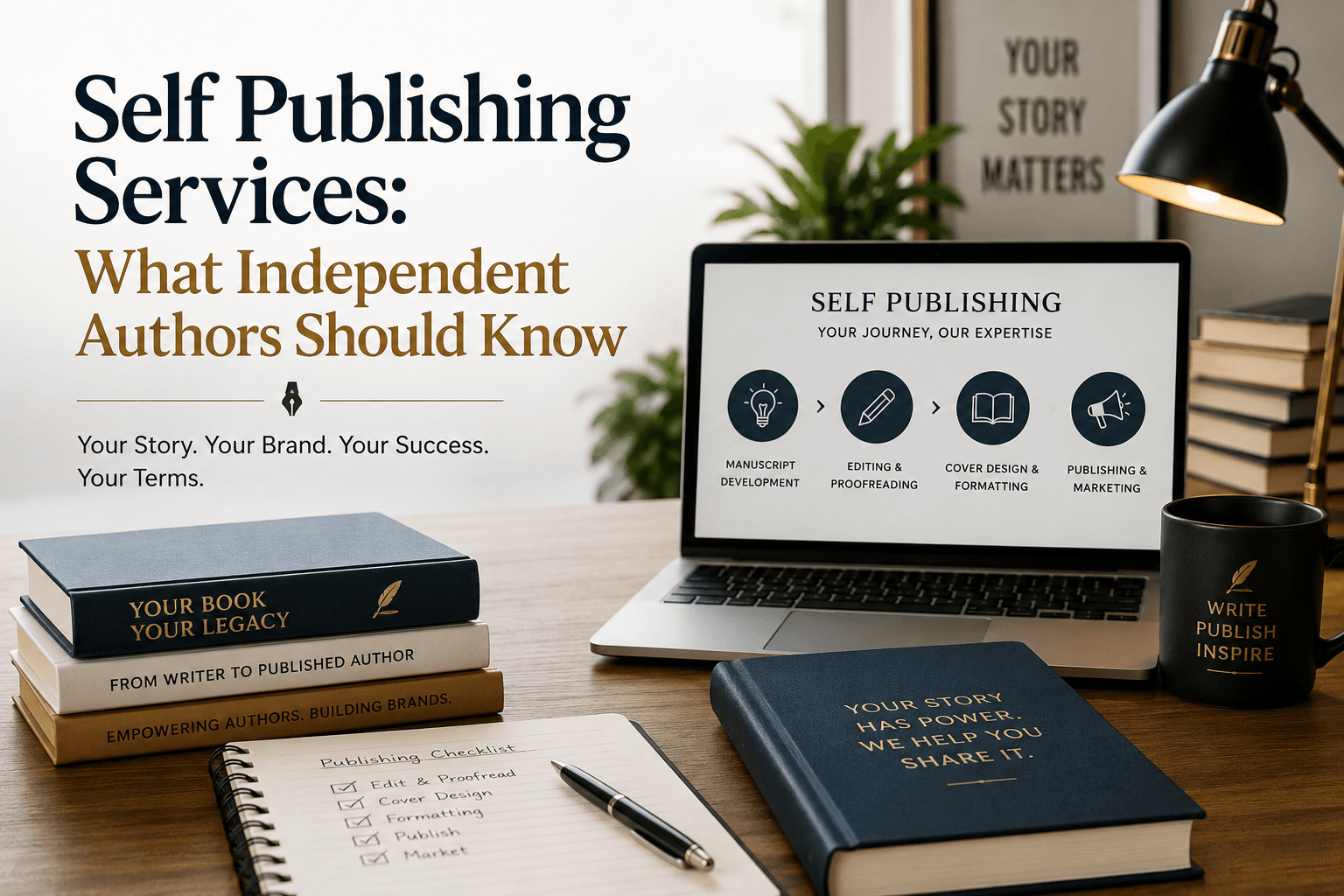
Professional Self Publishing Services: What Independent Authors Should Know
Professional self publishing services are commercial services that help authors prepare and release books without using the full production structure of a traditional publishing house. They may include manuscript assessment, editing, cover design, interior formatting, eBook conversion, account setup, printing, and distribution.
Read more →
How Long Does It Take a Ghostwriter to Write a Book
A book may begin with one clear idea, a folder of notes, or a voice recording made at 2 a.m. Turning that raw material into a finished manuscript is another matter.
Read more →
How to Turn Blog Posts Into a Published Book
A successful blog can contain years of useful ideas. You may already have detailed guides, personal stories, reader questions, case studies, and practical advice. The raw material is there. It is simply scattered across different pages.
Read more →
Why Fact-Checking Matters for Nonfiction Books
Nonfiction comes with an unspoken promise. The reader expects the people, dates, figures, events, and claims to be accurate. That does not mean every author must write like a court stenographer. Nonfiction can include opinion, interpretation, memory, and personal experience. Still, any statement that can be checked should be checked.
Read more →
How to Create a Book Trailer That Actually Sells
A book trailer can look expensive, sound dramatic, and still give readers no reason to buy the book. The usual problem is not video quality. It is strategy. Many trailers introduce the author, summarize the plot, display a few reviews, reveal the cover, and end with “available now.” Every expected ingredient is present, yet the viewer remains emotionally untouched.
Read more →
Memoir Ghostwriting: How to Tell Your Life Story Professionally
Most people who look into memoir ghostwriting aren’t searching for someone to write their life for them. They’re searching for someone who can help them find the shape of a story that’s been sitting in their memory, unorganized, for years.
Read more →
How to Prepare Your Manuscript for Professional Editing
Most authors don’t lose time in the writing. They lose it in the handoff, the moment a manuscript goes from “finished” to “ready for someone else to read critically.” Manuscript preparation is the work that happens in that gap, and skipping it is the single most common reason editing takes longer and costs more than authors expect.
Read more →
Why Every Author Needs a Book Sales Page, Not Just an Amazon Link
An author we worked with last year had done everything right on paper. Solid manuscript, professional cover, a launch week planned around a small ad budget. When it came time to actually send people somewhere, the plan was the same as almost every other debut author’s plan: post the Amazon link, hope people click it, hope they buy.
Read more →
How to Turn Your Memoir into a Marketable Book
Somewhere in the first draft of nearly every memoir, the author runs into the same quiet worry: does anyone actually want to read this? The life happened, the material is real, and the writing might even be good, but a memoir manuscript and a marketable memoir are not automatically the same thing. One is a record of what happened. The other is a book built for a reader who has never met the author and has no obligation to care.
Read more →
How to Plan Illustrations Before Writing a Children’s Book
Ask most first-time picture book authors when they started thinking about illustrations, and the answer is usually “after I finished the manuscript.” This feels logical. Write the story, then find someone to draw it. But picture books don't work the way novels do. The words and the art aren't separate layers stacked on top of each other; they’re a single storytelling unit, and treating them as two sequential steps is one of the most common reasons a manuscript stalls once it's time to bring in an illustrator.
Read more →
How to Fix Pacing Problems in a Novel Before Editing
A novel can have a compelling premise, believable characters, and polished prose and still lose readers because the story moves at the wrong speed. Sometimes nothing important changes for too long. Sometimes major events arrive so quickly that the reader cannot absorb them. In other cases, the manuscript contains plenty of action but still feels strangely flat.
Read more →
How Authors Can Use Podcast Interviews to Promote a Book
A podcast interview gives an author something most ads cannot create on their own: time with a listener. Not a quick impression. Not a passing glance at a book cover. Not a crowded social media caption competing with dozens of other posts. A real conversation.
Read more →