
Blogs
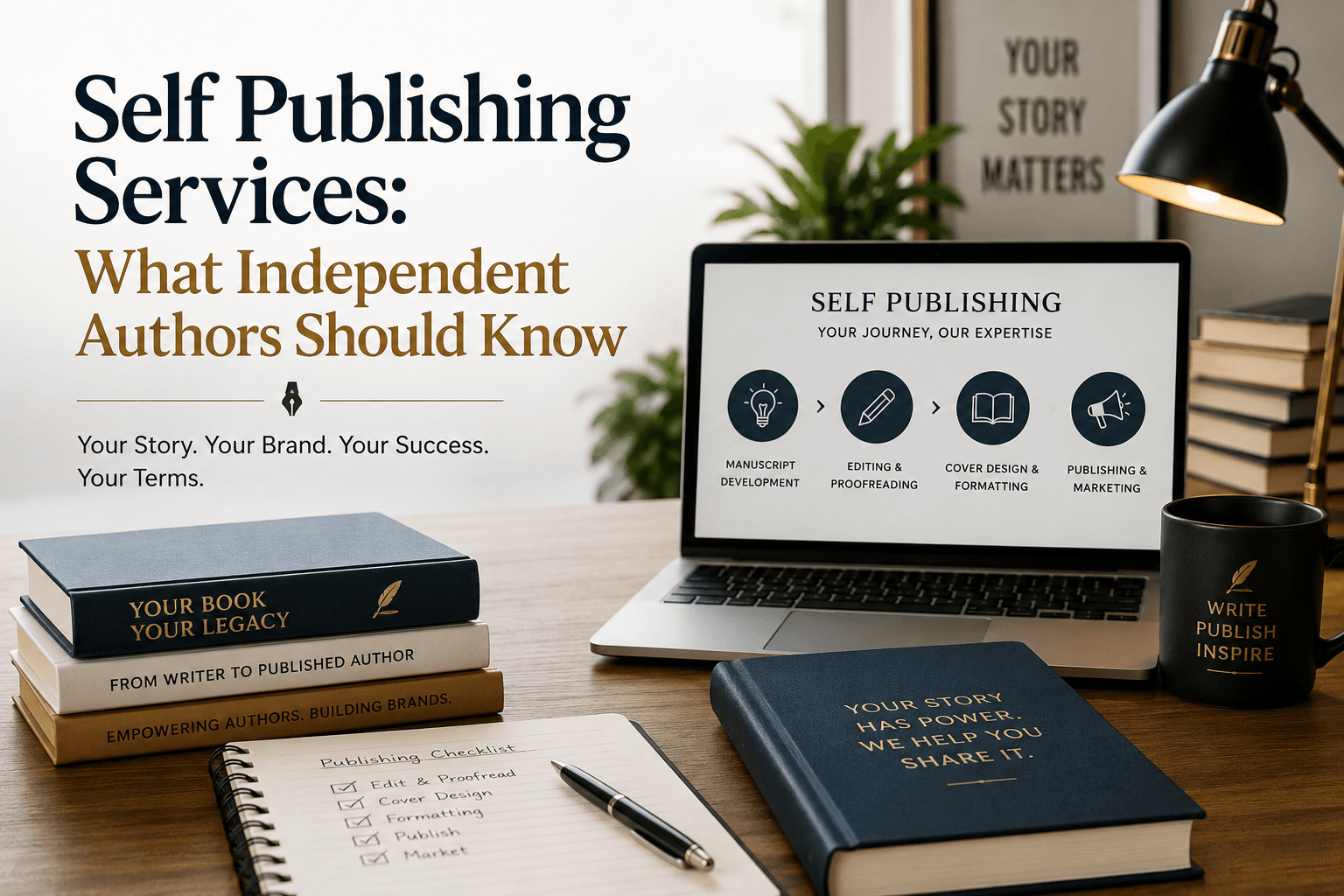
Professional Self Publishing Services: What Independent Authors Should Know
Professional self publishing services are commercial services that help authors prepare and release books without using the full production structure of a traditional publishing house. They may include manuscript assessment, editing, cover design, interior formatting, eBook conversion, account setup, printing, and distribution.
Read more →
How to Turn Blog Posts Into a Published Book
A successful blog can contain years of useful ideas. You may already have detailed guides, personal stories, reader questions, case studies, and practical advice. The raw material is there. It is simply scattered across different pages.
Read more →
Why Fact-Checking Matters for Nonfiction Books
Nonfiction comes with an unspoken promise. The reader expects the people, dates, figures, events, and claims to be accurate. That does not mean every author must write like a court stenographer. Nonfiction can include opinion, interpretation, memory, and personal experience. Still, any statement that can be checked should be checked.
Read more →
How to Turn Your Memoir into a Marketable Book
Somewhere in the first draft of nearly every memoir, the author runs into the same quiet worry: does anyone actually want to read this? The life happened, the material is real, and the writing might even be good, but a memoir manuscript and a marketable memoir are not automatically the same thing. One is a record of what happened. The other is a book built for a reader who has never met the author and has no obligation to care.
Read more →
How to Fix Pacing Problems in a Novel Before Editing
A novel can have a compelling premise, believable characters, and polished prose and still lose readers because the story moves at the wrong speed. Sometimes nothing important changes for too long. Sometimes major events arrive so quickly that the reader cannot absorb them. In other cases, the manuscript contains plenty of action but still feels strangely flat.
Read more →
How Authors Can Turn a Book Into a Speaking Opportunity
Most authors think the book is the product. It is not always the full product. Sometimes the book is the proof. The product is the conversation it allows you to lead.
Read more →
Book Sample Optimization: How First Chapters Influence Sales
Most authors think the sale happens on the book page. It does not always happen there.
Read more →
Book Series Launch Strategy: How to Plan Book 1, Sequels, and Reader Retention
Most authors think a book series begins when Book 1 is published. It does not.
Read more →
The Perfect Book Launch Timeline From 3 Months Out to Post-Release Day
A book launch should not begin on release day. By the time a book becomes available, readers should already know it exists, reviewers should already have copies, purchase links should be ready, the author’s website should be updated, and the main launch message should be clear. That does not happen by accident.
Read more →
How To Market A Book If I Have No Social Media Following?
The assumption that every author needs a large social media following before their book can succeed is one of the most widespread and damaging myths in modern publishing. It has caused genuine writers to delay launches, second-guess their work, and spend months trying to build Instagram audiences when their readers were never on Instagram to begin with.
Read more →
How to Turn Your Idea Into a Bestseller Without a Big Publisher
Most authors believe a bestseller starts with a publisher’s approval. They imagine an agent, a major publishing house, a large marketing team, and bookstore displays doing most of the heavy lifting. That path still exists, but it is no longer the only way to build a successful book.
Read more →
The Proven Way to Get 5-Star Reviews for Your First Book
Publishing your first book is only half the battle. The other half is convincing strangers to trust it enough to buy it, and in 2026, that trust is almost entirely built on reviews. Studies consistently show that the majority of online buyers read reviews before making a purchase decision, and books are no exception. To get 5-star book reviews as a debut author, you need more than a good book. You need a deliberate, structured approach that starts long before launch day and continues well after it.
Read more →